
Building Cabin Communities to break the cycle of homelessness
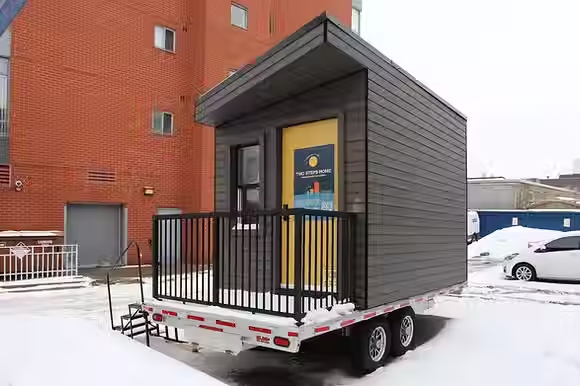
Two Steps Home is building Micro-Modular Transitional Housing in Durham Region and Toronto, Ontario. Each community will help 50 unhoused people at a time move out of encampments into secure, dignified, private units, regain their health & stability, and get ready to succeed into long-term housing.

Support Two Steps Home
Want to help us build a path out of homelessness for people in the GTA? We ask you to do any of the following:
Talk to your Councillor
Tell your local government officials that you want to see Micro-Modular Transitional Housing in your community.
Donate to our campaign
Make a recurring donation, buy a cabin, or support our new $6.3M fundraising campaign to build Durham Region's first Micro-Modular Transitional Housing project.


.png)

Recent news
Two Steps Home is a non-profit advocating for and developing Micro-Modular Transitional Housing across the Greater Toronto Area.
Since 2023, we have been promoting the Cabin Community model in Toronto, deputing to the Economic & Community Development Committee in 2024 and 2025, resulting in Shelter & Support Services releasing an Expression of Interest.
Alongside Durham Region Non-Profit Housing Corporation, we have now received unanimous approval from Durham Region Committee of the Whole to build the Region's first Micro-Modular project, and are securing capital to build in 2026.
What we're doing


Over 15,000 people are currently experiencing homelessness in the Greater Toronto Area. Hundreds move between shelters and encampments each day, living in tents in parks in freezing temperatures or extreme heat, without a way to break that cycle for good and move forward with their lives.
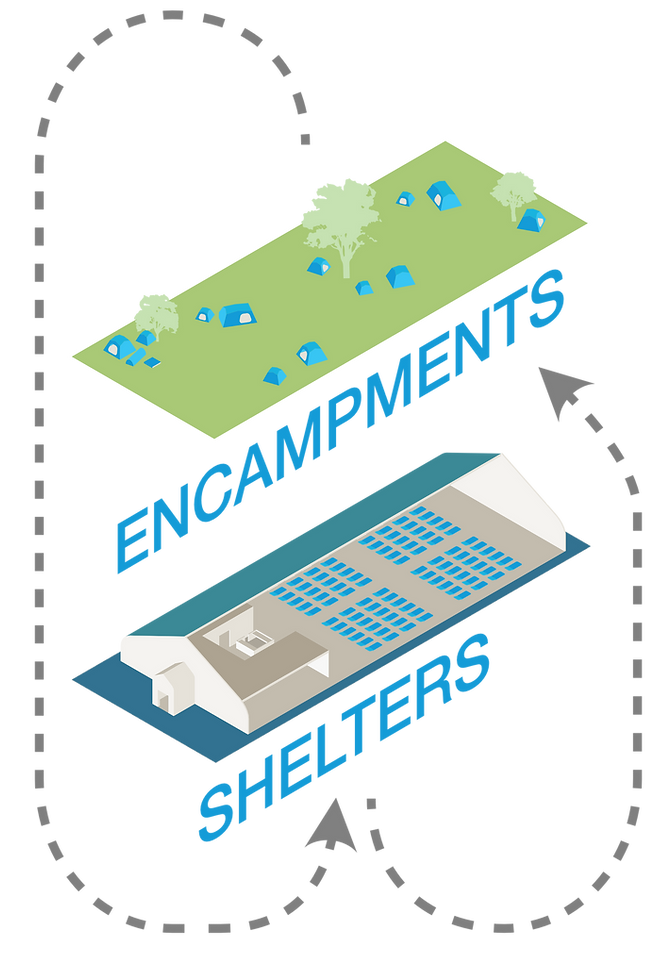
Two steps: a transitional model.
Over a stay of 12-24 months, residents will receive on-site supports that prepare them with the skills they need to successfully transition back into permanent housing.
Once they complete the program, the Cabin will open up for another person experiencing homelessness to move out of their encampment and begin their healing journey. Flow is created within the shelter system.
In Durham, the project will be run by experienced housing provider Durham Region Non-Profit Housing Corporation, with additional supports from local service partners.

Parts of a Micro-Modular Cabin Community

0.75a of Vacant Land
-
Public, private, or faith-owned
-
Serviced with water, sewer, hydro

50 Resident Cabins
-
96 square feet sleeping quarters
-
Lockable steel door with steel frame
-
Ventilation & natural light
-
Electric heating & AC
-
Ontario Building Code compliant
-
Flatbed & forklift -ready
-
Easily relocatable
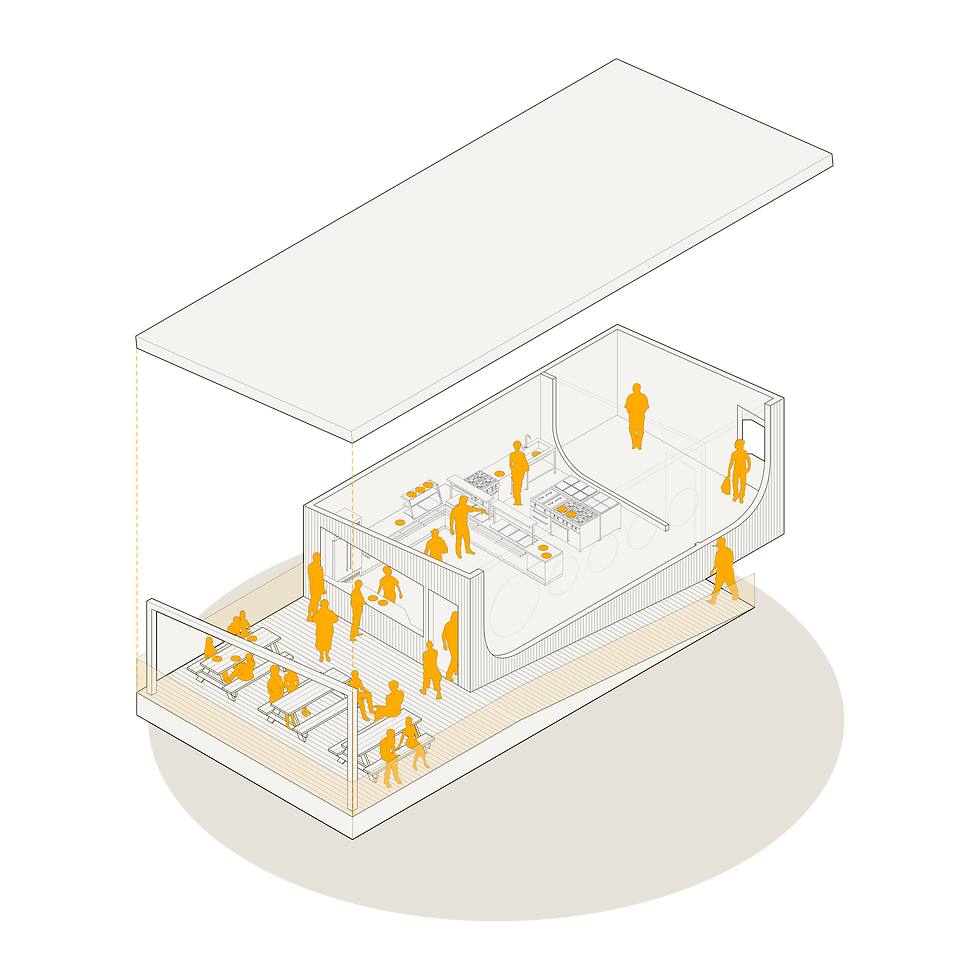
Common House
-
OBC-compliant modular structures
-
Washrooms & showers
-
Commercial kitchen
-
Resident dining room
-
Case management offices
-
Community spaces
-
TV and living area
24/7 Services
Meal programs, wound care, health clinics, education connections, ID assistance, housing case work, mental health supports, and more
Ready for relocation.
Cabin Communities are significantly cheaper to build than other forms of transitional or supportive housing, but also allow for greater flexibility in their delivery.
Because they require minimal site work, a Micro-Modular cabin community can be fully operational within six months of receiving approvals. Additionally, the cabins and communal facility are designed to be moved when land is ready for more intensive development. All structures can be transported by flatbed truck to another site, freeing up land for permanent housing to be built.
Cabin communities are effective temporary & interim uses of lands awaiting future development (click through the timeline to see).
Step 1: Empty Site
Secure vacant land or pre-development sites (future housing, etc).

Step 2: Deploy Cabins
Modular structures arrive via flatbed, and a fence is built.

Step 3: Transitional Housing
Community operates for 3-5 years with 24/7 wrap-around supports.

Step 4: Site Exit
Cabins & program relocated when needed.

Step 5: Construction
Ground breaks for long-term housing or other development.

Step 6: Long-term housing
Cabin residents ready for housing can transition into new units.
A cost-effective model for healthcare.
Micro-Modular Transitional Housing offers significant cost savings compared to other homelessness solutions. By taking pressure off hospitals and other critical infrastructure, the community will help ensure existing healthcare and hospital funding be used more effectively, saving millions of dollars annually in taxpayer dollars.
Cost of one month in hospital for someone chronically unhoused
$60K
Cost of one month in prison for someone chronically unhoused
$15K
Cost of one month in a Cabin Community
$3.5K
Yearly operating cost for a 50-person Cabin Community
~$2M
Connect with us.
Want to connect? Use the form to sign up for our mailing list, discuss becoming a Project Sponsor, connect us with a potential land option, or offer your services.
We look forward to hearing from you!